On the Layers of Lore and How They Work Together
So the book is organized into seven different sections. Basically, the first section is the Anomaly Files 1 through 51. That’s the core story. That’s Emily’s story. Everything starts there. It’s the surface layer, but it’s essential, because everything else grows out of it.
The second section—which is really the gateway into the different layers of lore—is called the Shard Logbook. As you read the Anomaly Files, you’re going to encounter the little diamonds, or chevrons. Those chevrons lead you into the Shard Logbook.
That first entryway—or gateway—into the deeper sections of the book literally has a log for each of the anomaly files. There are 51 anomaly files, so there are 51 Shard Logbook entries. Each one corresponds directly to an Anomaly File, which again, is Emily’s story. The Shard Logbook is not just extra material—it’s the mechanism that allows you to go deeper.
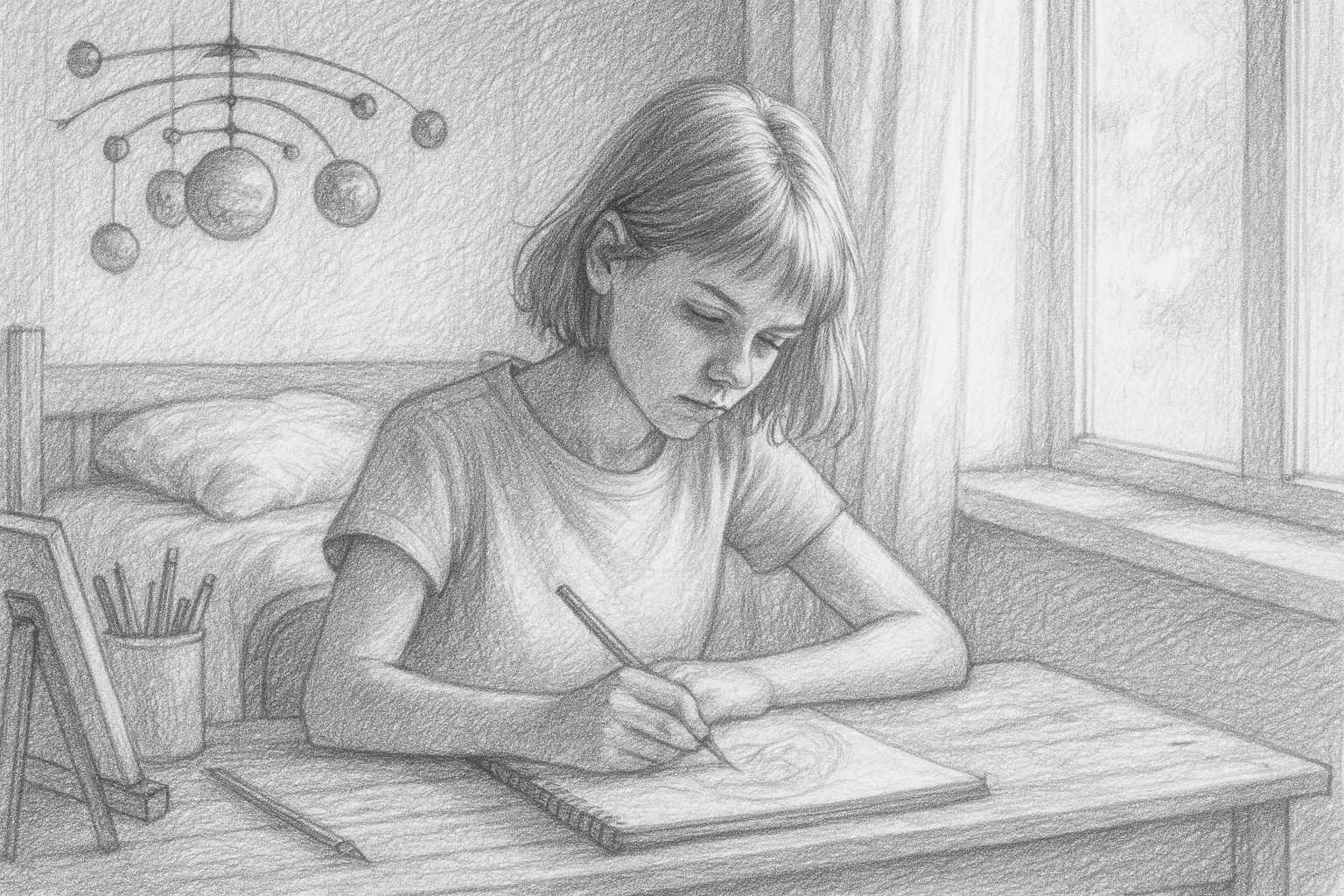
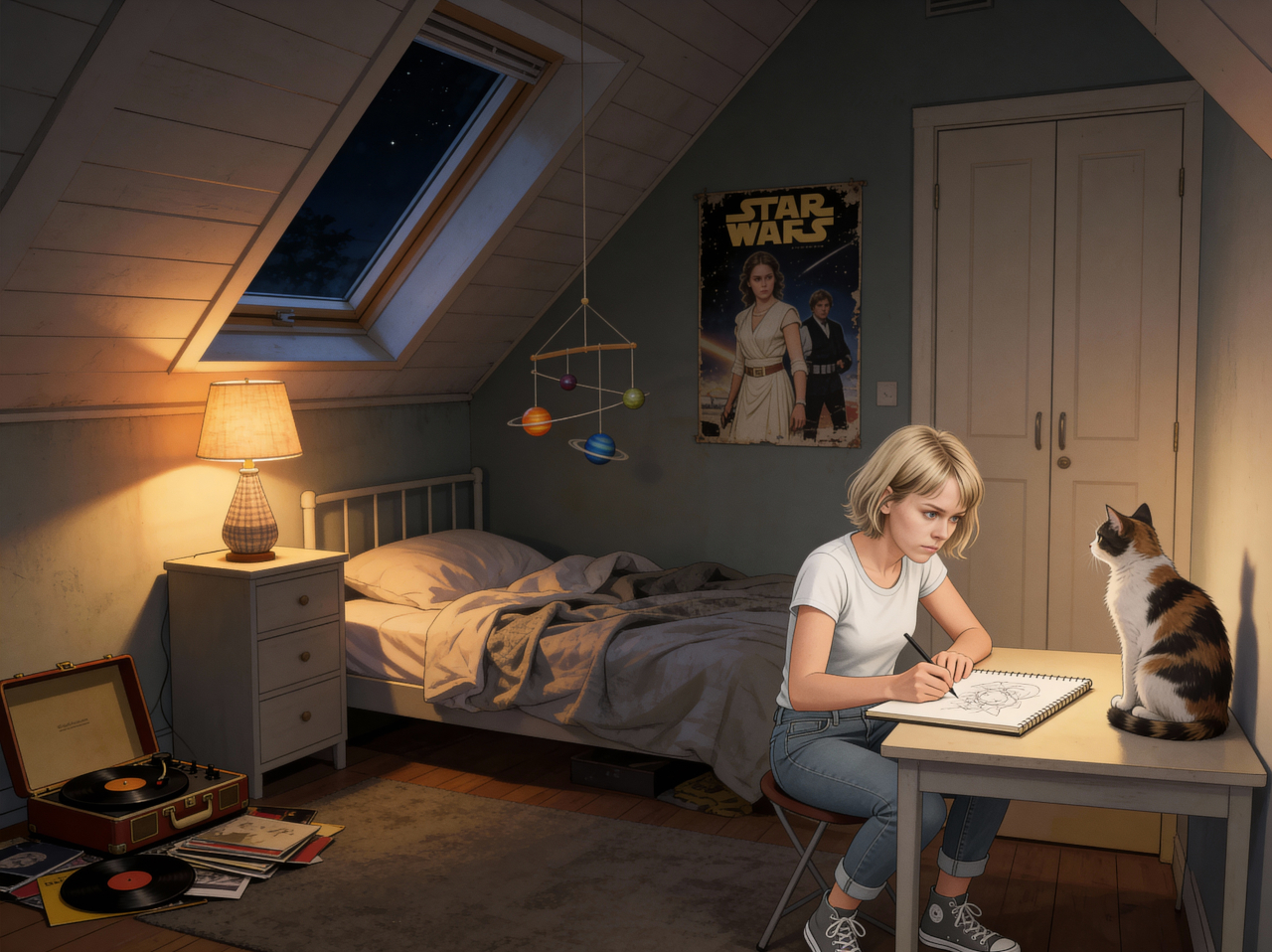
Those shards that are located in each one of these logs can take you into the next layer of depth, which is the digital images. These are literal images that are part of the story. Most of them are sketches done by Emily, because she’s an artist. This is where the book starts to move beyond text and into visual memory. In that sense, the Shard Logbook is the first real gateway—the first layer of deepening your experience of the book.
Now, even I have to correct myself sometimes on the numbering, because I jump around. But once you line it up, this is how it works.
Layer one is the Anomaly Files.
Layer two is the Shard Logbook.
Layer three is the digital images.
The fourth layer is Emily’s Oraculum. The Oraculum is about the traits Emily is trying to identify, preserve, and carry forward to the next generation. This layer is more philosophical and internal. It’s about meaning, inheritance, and continuity rather than plot.
The fifth layer is the Node Codex, more specifically the NC Codex, where NC stands for Node Collective. This represents the collective knowledge of the Palraxian race over roughly 600 millennia, if I’m remembering my own lore correctly. This layer is much more technical. It explains why they are here, what they are doing, and how they do it—down to the specifics of their vessels, defensive systems, data nodes, implantation procedures, host evaluation protocols, controlled exposure, and crop circles. This is where you start to understand that they are essentially the advance team for an invasion involving the eventual arrival of roughly two billion of their species.
The sixth layer is Neur’s Oraculum. Neur is the female alien anomaly from the Palraxian’s home planet. She was chosen by the ancestors and put in charge of looking for the anomaly within the other anomalies on Earth. Her Oraculum is her personal story—how she grew up on her planet, what she experienced, how she was formed, how she responded to being chosen, and ultimately how she finds Emily. This layer is still very much in the voice of the aliens, but it’s more emotionally accessible than the deepest layer. It’s semi-cryptic, and there are 12 sections, each with a translation to bring it closer to human language.
The seventh and deepest layer is the Thrae-Draen.
The Thrae-Draen is the account of the Ancients. These are not gray aliens like Neur. They are humanoid-looking beings from a different solar system—tall, with six fingers, long white-blonde hair, and lifespans that stretch across several centuries. They are fundamentally different from the Palraxian’s and are basically behind the whole reason for the existence of the galaxy as it is.
The Thrae-Draen is written in a very cryptic and very ancient way of speaking, and it is not translated. There are 11 Thrae-Draen entries. Some of them include Earth—its seeding, their visitation long before the gray aliens ever came, and even their influence in shaping human civilization over centuries, over millennia.
This is the layer where the reader is meant to slow down completely. Ideally, you read the story straight through first. Then you come back, follow the shards, move through the deeper layers, and when you reach the Thrae-Draen, you’re trying to piece together the ancestors’ message as it passes through multiple races and epochs, finally reaching us—humanity. It’s their history, but it’s also something much bigger than that. And honestly, it’s hard to even explain it, and I wrote it myself.
The Node Codex is deep, but it’s technical. Neur’s Oraculum is deeper, but still somewhat interpretable. The Thrae-Draen is the deepest layer of all—not because it explains everything clearly, but because it refuses to.
And that’s basically how the layers work, how they stack, and how their depth increases. I did skip around a little in explaining it, but this is the structure underneath it all.
Alien.im is a very complex reading experience. It’s going to take time. The slower you go, and the more you delve into the different depths of the layers, the more you’ll begin to get a sense of what’s really going on. And this is author commentary, so I’m speaking directly to you.
I’ve been looking for the true premise of why aliens are here and who they are for many years—going all the way back to the 1960s. That’s the era I was born in, the early 1960s, right at the beginning of the space program. Because of that, I’ve seen and heard just about every premise out there about why aliens are visiting us and why they might be among us. And to date, I haven’t found one that is truly believable to me.
That’s one of the reasons I decided to write this story.
I’ve pretty much heard it all, and I’ve never really been able to say, now that makes sense to me. Now, of course, I’m biased. I like my own book. I’m the writer of it. I’m the author of it. But if I weren’t—if I were reading it myself for the first time—I think I’d be able to put my finger on it and say, this is believable to me. This makes sense to me.
Instead of just writing a book and explaining everything to you through characters and their adventures and their spaceships and their flying to other galaxies—scratch galaxies out of that, we’re in one galaxy here—or just explaining it all away, I want you to search for it. I want you to derive your own meaning from what you think the premise is.
That’s why I use cryptic language. That’s why I use the ancient language of the Palraxian’s and the Ancients. The reason I do that is so that it becomes a search for you.
Not just something you read—but something you uncover.